Zusammenfassung anzeigen Zusammenfassung ausblenden
Summary:
- Uncover the deep meaning of pounamu in Māori culture.
- Follow the TranzAlpine’s path through ancient trading routes.
- Meet local artisans who bring greenstone to life.
- Learn how to travel these lands with care and connection.
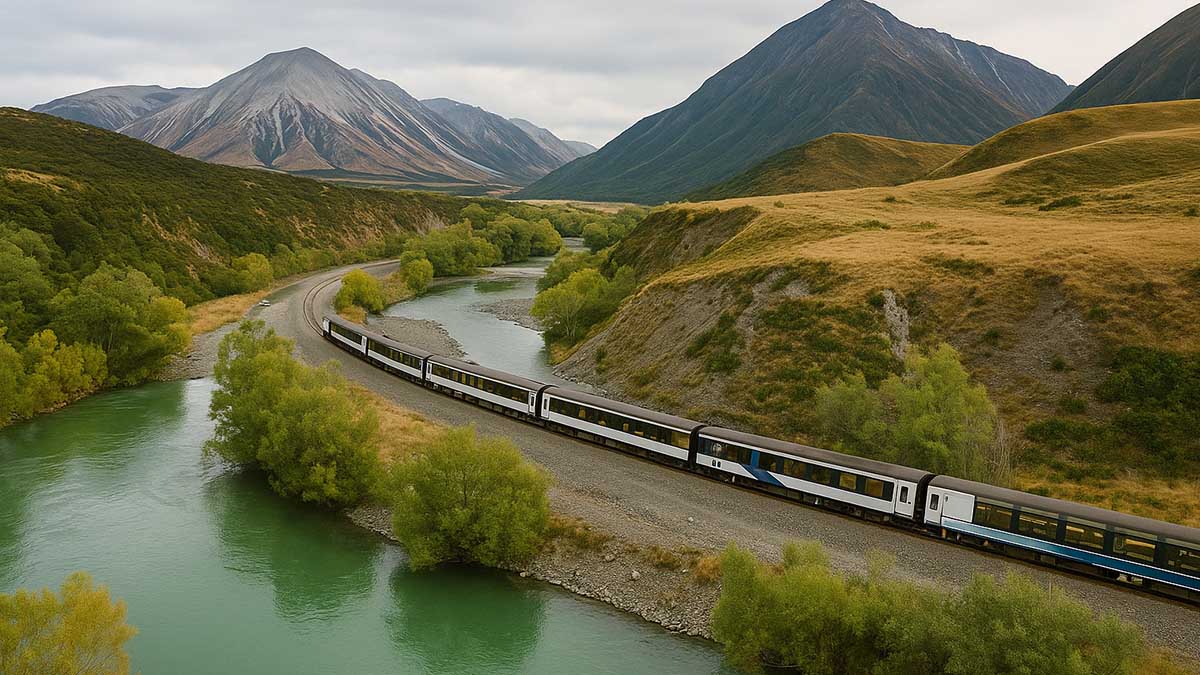
Few train journeys manage to feel both effortless and deeply spiritual. The TranzAlpine glides through the heart of New Zealand, from the wild west coast of the South Island to the soft plains of Canterbury. Yet every kilometre hums with stories older than memory itself.
Long before the steel rails were laid, Māori iwi (tribes) walked these valleys, carrying jade through mist and rain to trade with the east. The train, in a way, is their modern echo: tracing invisible routes where stone, river and mountain once guided people across worlds.
Allein reisen als Frau: Diese 15 Regeln machen’s sofort entspannter
Europa 2026: Diese 6 Reiseideen fühlen sich endlich wieder nach Urlaub an
Pounamu: the stone that chooses you
Pounamu isn’t just a mineral, it’s a heartbeat. Found only in rivers spilling from the Southern Alps, each stone glows with its own character, from deep forest green to milky white. To Māori, it holds spiritual energy, or mauri, linking generations through protection and remembrance.
Locals say that pounamu chooses you, not the other way around. Searching for it is less about collecting and more about listening: to the river, to silence, to the rhythm of the land. When one appears, it feels like being seen rather than finding something new.
Traveler’s note
Never take pounamu from a riverbed without permission. The stone belongs to the land and its guardians. Guided walks in Arahura or Hokitika allow respectful discovery while supporting local communities.
Where rails follow ancient footsteps
The TranzAlpine’s 223-kilometre route from Greymouth to Christchurch cuts through a landscape that has shaped both trade and myth. Each stop hides a fragment of ancestral memory.
At Moana, where the lake mirrors snow-covered peaks, Māori once built canoes from tall reeds to glide downstream. Further east, Arthur’s Pass was a gathering point between iwi, a place to rest and share food before the steep descent.
Looking through the window, it’s easy to imagine those crossings centuries ago: the same ridges, the same silver rivers, the same quiet determination. What has changed is the rhythm, from footsteps to the soft hum of wheels on steel.
Hands that listen to the stone
In Hokitika, jade carving isn’t performance, it’s conversation. Walk past the small workshops downtown and you’ll hear the gentle buzz of sanders shaping pounamu into curved pendants and smooth blades.
Each design tells its own story:
- Hei matau (fish hook) – strength and safe travels.
- Koru (fern spiral) – renewal and growth.
- Toki (adze blade) – determination and courage.
Visitors can join a short carving workshop guided by local artisans. They’ll help you find what the stone “wants to become”. It’s not about perfection, it’s about presence and connection. By the time your fingers trace the final curve, you’ve left a piece of yourself inside it.
Lakes, legends, and the echo of conflict
Before it became a peaceful holiday stop, Lake Brunner was a place of alliances and rivalries. Centuries ago, it belonged to the Ngāti Wairangi iwi, whose villages thrived on fishing, carving and trade. When a rival tribe discovered their route across the mountains, a long struggle began for control of the pounamu trade, reshaping the region’s destiny.
Today, the surface of the lake hides that history beneath calm reflections. Families paddle kayaks, children skip stones, and the past whispers softly through the trees. Yet every ripple carries memory, a reminder that beauty and conflict often share the same ground.
The journey that connects more than places
As the train climbs toward the high passes, frost whitens the fields and waterfalls carve threads of light down the cliffs. Inside, passengers sip coffee in silence, caught between comfort and contemplation.
The TranzAlpine isn’t just transport, it’s a moving observatory of how landscape shapes identity. You travel not only through space, but through the stories of those who came before. Somewhere between the peaks and the plains, the journey stops being about destination and starts being about belonging.
Dresden in 2 tagen: Altstadt, Elbe und Neustadt ohne Stress erleben
Bodensee auf deutscher Seite: Konstanz, Mainau und Lindau entspannt entdecken
When the train finally glides into Christchurch, the jade pendant in your pocket feels heavier, not in weight but in meaning. It’s more than a souvenir, it’s a quiet promise between you and the land.
Crossing the TranzAlpine feels like turning the pages of a living book. Each mountain pass, each flash of greenstone, speaks of endurance, memory and connection. Beneath the postcard views lies something timeless: the idea that to travel here is to listen, to feel, and to remember.