Zusammenfassung anzeigen Zusammenfassung ausblenden
Summary:
- Six volcano hikes that mix thrill, wonder, and culture.
- How to explore active volcanoes safely.
- Local rituals and small moments that make each place unique.
- What to pack and when to go.
- The kind of awe only a living mountain can inspire.
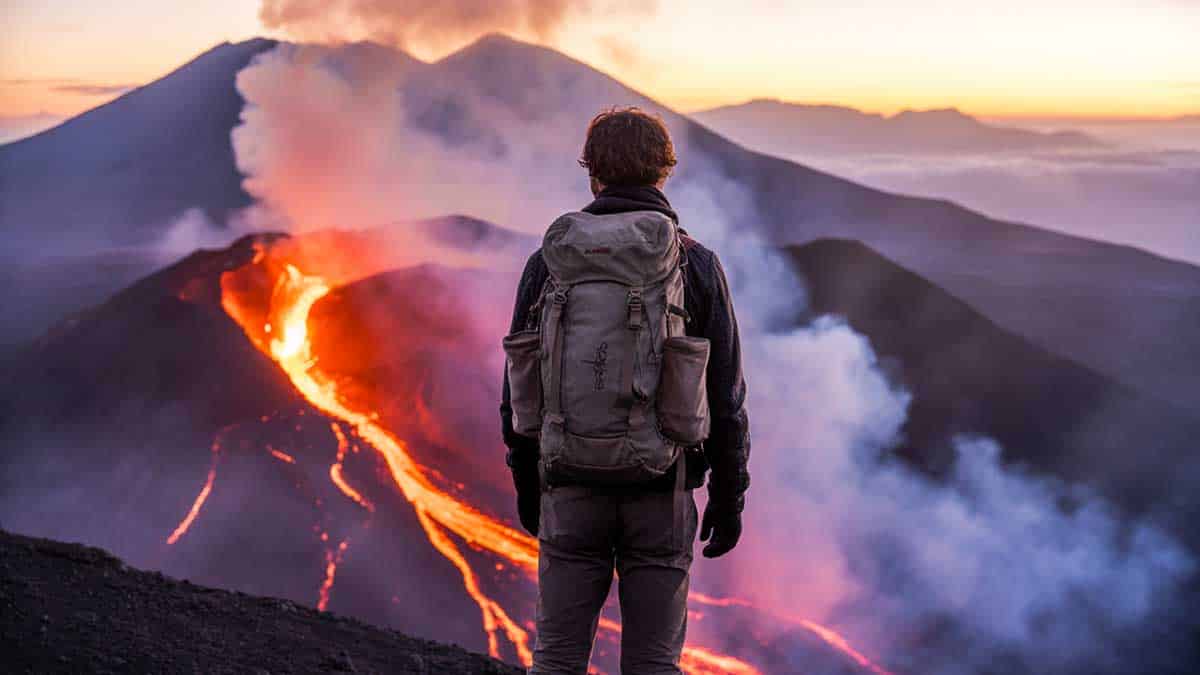
There’s a silence you only find on volcanoes, a deep, vibrating quiet that feels like the world holding its breath. The ground is still warm, the air smells faintly of sulfur, and the wind carries the echo of something ancient. It’s not just a landscape; it’s a conversation between fire and time.
For those who venture up these slopes, hiking an active volcano isn’t about chasing danger. It’s about curiosity and connection, about understanding how life thrives where the Earth breaks open. From Chile to Japan, each volcano tells a story of creation, resilience and renewal. Here are six that show what it truly means to walk on living ground.
64 % waren weg: Was das über Urlaub in Deutschland verrät
Avignon an einem Tag: Die entspannte Route für Palast, Brücke und Markt
Mt. Etna, Italy: the mountain that never sleeps
Etna looms above Sicily like a restless storyteller, rewriting its tale with every eruption. At 3,300 meters, it’s both a threat and a gift, reshaping the island’s soil and feeding its vineyards. Locals have learned to live with it, their routines guided by the volcano’s moods.
The Silvestri Craters trail, near Rifugio Sapienza, is perfect for an easy start. You wander through black fields of solidified lava, their ripples frozen mid-flow, before reaching viewpoints that open onto the Mediterranean. For the bold, guided hikes to the summit reveal another world: fumaroles puffing white smoke, the crunch of warm ash underfoot, and the feeling of walking on another planet.
After the descent, a glass of Nerello Mascalese wine made from volcanic soil tastes like a small victory. Etna gives and takes, but it never stops giving lessons in coexistence.
Kilauea, Hawaii: where fire teaches patience
In Hawaii, Kilauea is more than a volcano. Locals speak of Pele, the goddess of fire, not as myth but as a presence that demands respect. Inside Hawaiʻi Volcanoes National Park, trails cut through landscapes that shift from rainforest to wasteland within minutes.
The Kīlauea Iki Trail crosses what was once a molten lake, now a vast cracked floor that still steams in places. The air hums with heat, and every sound (footsteps, breath, wind) feels amplified by the stillness. As dusk falls, head to Halemaʻumaʻu Crater Overlook: when the sky glows orange, you understand why locals leave offerings to the fire.
Even when the lava rests, Kilauea keeps sculpting the island. Ferns push through the rock, rain gathers in hollows, and life comes back stronger every time.
Villarrica, Chile: riding the line between ice and fire
Villarrica stands above the Chilean town of Pucón, a perfect white cone with a heart of flame. It’s one of South America’s most active volcanoes, yet climbing it feels strangely playful.
The ascent begins before dawn, when climbers crunch through volcanic gravel under the stars. As daylight grows, the Andes unfold in layers of pink and silver. Higher up, the air grows thin, the smell of sulfur sharper, until the summit reveals a crater that rumbles softly beneath a veil of smoke.
And then comes the best part: the descent. Climbers sit on small sleds and slide through snowfields, laughing like children. Later, a soak in Pucón’s hot springs brings quiet satisfaction, the warmth echoing the fire still burning below.
Pacaya, Guatemala: fire you can touch
Pacaya may be modest in size, but it’s full of life. Just an hour from Antigua, this active volcano erupts often enough to stay warm all year. The trail starts in a lush forest of pine and coffee plants, before the greenery gives way to a sea of black stone still warm underfoot.
Hiking here feels oddly intimate. Locals lead groups along winding paths, pointing to new lava flows as if sharing family news. Near the top, the ritual begins: roasting marshmallows on volcanic rocks while the smoke curls gently into the air. It’s simple, joyful and unforgettable.
The summit itself remains off-limits, but the views of Agua, Fuego and Acatenango are worth every step, especially at sunset when the skyline glows.
Mt. Meakan, Japan: steam, silence and stories
Far in Japan’s north, Mt. Meakan rises from Hokkaido’s forested lands above Lake Akan. The air is sharp and clean, carrying the faint scent of sulfur and cedar. Here, the Earth feels truly wild, and its twin craters breathe softly into the wind.
The trail stretches nearly 10 miles, winding from quiet birch forests into a barren world of ash and pumice. Steam hisses from fissures, and each gust of wind carries warmth from below. At the summit, white plumes twist against a deep blue sky, while the landscape below unfolds as a patchwork of lakes and mountains.
According to the Ainu people, Meakan (Machineshiri) is the woman’s mountain, forever separated from her lover Mt. Oakan. Knowing the legend changes the mood of the climb, the steam becomes her sighs, the wind her whisper. Few hikes in Japan feel this raw, this alive.
Before you step on fire: getting it right
A volcano hike isn’t just another trail. It’s a dialogue between you and a living mountain. Preparation doesn’t kill the mystery, it allows you to feel it safely.
Pack well: strong boots, layered clothes, at least two liters of water, salty snacks, and a mask or scarf for the gases. Bring a headlamp if you start early.
Stay alert: always check recent activity reports. Never stray from marked paths, and never ignore guides, they know when the volcano is calm and when it’s restless.
Zypern im Mietwagen: Die Route für 7 bis 14 Tage ohne Stress
Langkawi ohne Stress erleben: Strand, Aussicht und einfache Tipps
Volcanoes don’t test your strength; they test your awareness and humility. Respect them, and they’ll reward you with beauty that can’t be explained, only felt.
Standing at the edge of a crater, time slows. The world feels older, wiser and more fragile than you imagined. You breathe, and the mountain breathes back.Volcano hikes aren’t about conquering anything. They’re about witnessing life at its most elemental, where rock, air and fire meet. You descend covered in dust, your pulse still racing, grateful for the reminder that the planet is not something beneath us, but something we belong to.