Zusammenfassung anzeigen Zusammenfassung ausblenden
Summary:
- The most beautiful routes to reach the summit.
- How altitude truly feels and how to adapt to it.
- What the trek actually costs and what it includes.
- Emotional lessons learned along the way.
- Why the descent often feels as meaningful as the top.
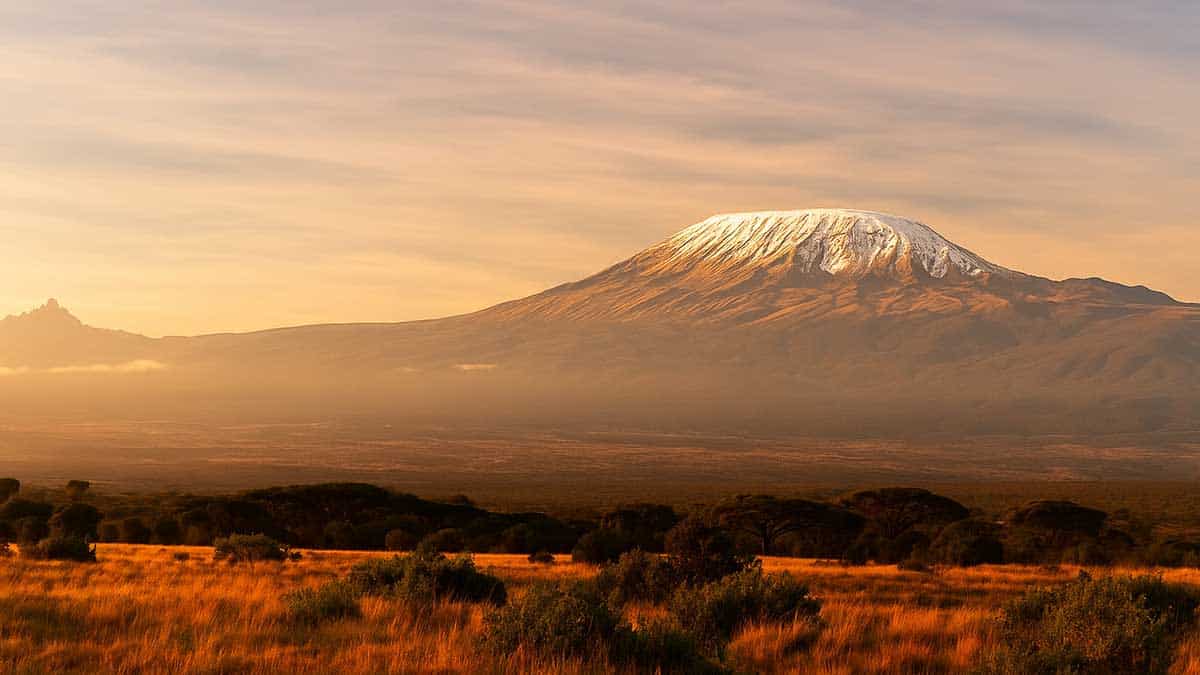
There’s a quiet awe the first time you see Kilimanjaro. From the airplane window, it seems to float, a lone giant dusted with snow over miles of savannah. For a moment, it feels less like a mountain and more like a living presence.
Yet this peak, Africa’s highest, welcomes ordinary hikers who take it slow. No ropes, no ice axes, just steady feet and time. What you climb isn’t only altitude, it’s the noise and speed you leave behind.
Allein reisen als Frau: Diese 15 Regeln machen’s sofort entspannter
Europa 2026: Diese 6 Reiseideen fühlen sich endlich wieder nach Urlaub an
Choosing your route to the roof of africa
Kilimanjaro can be approached from several directions, and the route you pick defines your story.
The Machame route (the Whiskey Route) offers variety: rainforest, rocky ridges, high-altitude desert, then the snows of Uhuru Peak. The Lemosho route is slightly longer, loved for its quiet start and untouched valleys.
The Marangu route (the Coca-Cola Route) trades tents for huts, offering comfort but less time to acclimatize properly. The Rongai route, coming from the north, stays dry and quiet, ideal for solitude.
| Route | Duration | Difficulty | Highlights |
| Machame | 6–7 days | Moderate | Forests, Barranco Wall, panoramic views |
| Lemosho | 7–8 days | Moderate | Remote start, scenic variety |
| Marangu | 5–6 days | Easier trail | Huts, heritage route |
| Rongai | 6–7 days | Moderate | Quieter, dry conditions |
Every ascent begins near Moshi or Arusha, where licensed guides organize the climb. It’s a safety rule and a way to ensure Tanzanian communities benefit from the mountain that defines them.
Days of climb: between dust and stars
Life on Kilimanjaro quickly becomes rhythm. Wake to frost on the tent, sip hot coffee, follow the trail through mist or sunlight. The rainforest hums below, then fades into heather, dust and silence.
You walk pole pole (slowly, slowly) while porters surge ahead carrying loads twice your size. By Barafu Camp, the world below is a sea of clouds. The air is thin, the stars seem endless, and every breath feels earned.
Then comes summit night. You start before midnight beneath a ribbon of headlamps, climbing in near silence. Breathing hurts, time blurs, and suddenly the horizon glows. Icefields catch the light as the first sun touches Uhuru Peak (5,895 m). The moment is quiet, yet unforgettable.
What the mountain teaches
Kilimanjaro isn’t something you conquer, it’s something you learn from.
You learn to slow down, to respect every breath, to listen to silence. Locals say pole pole (slowly, slowly) and you realize it’s not only about pace, it’s about attention.
Altitude humbles, repetition soothes, and shared hardship turns strangers into companions. For Tanzanians, Uhurumeans “freedom”, yet on this mountain it often feels like clarity.
If you’re planning to climb
- Best seasons: January–March and June–October for clearer skies.
- Budget: about 2,000–3,000 USD, including permits, guides, food and equipment.
- Training: regular hiking and cardio two months before departure.
- Health: hydrate, ascend gradually, respect rest days.
- Ethics: choose KPAP-certified operators that treat porters fairly.
Dresden in 2 tagen: Altstadt, Elbe und Neustadt ohne Stress erleben
Bodensee auf deutscher Seite: Konstanz, Mainau und Lindau entspannt entdecken
Traveler’s note:
Don’t rush the summit. The mountain will wait; your memories will last longer than the photo.
The descent feels lighter but no less powerful. Knees ache, lungs open, laughter returns. A calm remains, the trace of something that asked for all you had and gave back perspective.At the bottom, Kilimanjaro fades into clouds again, yet one truth stays with you: real height isn’t measured in meters, it’s held in moments that change how you see the world.