Zusammenfassung anzeigen Zusammenfassung ausblenden
Summary :
- When and where to see cherry blossoms across Japan.
- How locals celebrate hanami, the art of flower viewing.
- Tips for planning your trip and avoiding the crowds.
- The most memorable and lesser-known viewing spots.
- What to see beyond the sakura season.
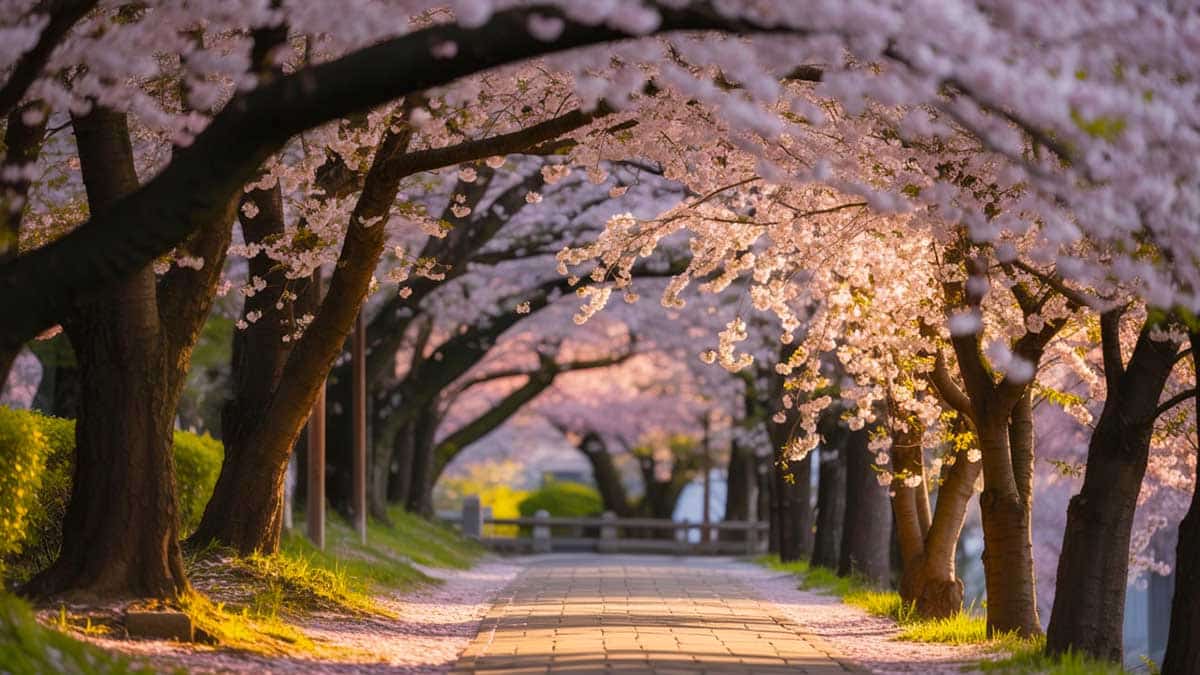
When spring arrives in Japan, everything seems to exhale. From Okinawa’s gentle hills to Hokkaido’s wide skies, millions of cherry trees bloom almost at once. Streets blush, rivers mirror the light, and people gather in parks as if answering an old call.
The sakura season isn’t just a postcard moment, it’s a ritual. This guide shows you how to feel it the way locals do: with patience, curiosity, and presence. We’ll go south to north, following the blossoms as they cross the country, and learn how this fleeting beauty still shapes Japan’s soul.
64 % waren weg: Was das über Urlaub in Deutschland verrät
Avignon an einem Tag: Die entspannte Route für Palast, Brücke und Markt
What sakura season really means
Cherry blossoms are more than Japan’s national symbol. They’re a philosophy in bloom. Each petal speaks of impermanence, of beauty that doesn’t ask to last.
During hanami (literally, „flower viewing“), families, coworkers, and friends gather under the trees to eat, talk, laugh, and sometimes nap in the shade. Parks become living rooms under the sky. At night, the trees glow with paper lanterns, the yozakura, turning the air gold and pink.
Traveler’s note: Don’t stay on the sidelines. Bring snacks, share them with strangers, and let the moment unfold around you. Hanami isn’t something to observe. It’s something to join.
When and where to see the blossoms
The sakura zensen, Japan’s cherry blossom front, sweeps north like a slow tide. Locals follow it closely, maps in hand, watching spring rise through the islands.
| Region | Blooming period | Why go |
| Okinawa | Late Jan – Feb | Early blooms and tropical scenery |
| Kyoto / Tokyo | Late Mar – Early Apr | Peak season, perfect weather |
| Hokkaido | Late Apr – May | Peaceful parks, crisp air |
If you travel along that rhythm, you’ll see Japan change with the flowers. Every stop offers a different mood, from the festive energy of Tokyo to the calm reflection of Kyoto’s gardens.
Best places to experience it
Okinawa and Kyushu
In the far south, spring begins when most of Japan is still in winter. On Mount Yaedake, winding roads are lined with pink trees, and locals drive up just to see the view. At night, the Nakijin Castle ruins glow softly with lanterns.
Further north, Kumamoto Castle is surrounded by over a thousand cherry trees. From its stone walls, you can see how nature and history still share the same stage.
Kyoto
If one city embodies sakura, it’s Kyoto. The Philosopher’s Path, a quiet canal framed by hundreds of trees, invites slow walks and long thoughts. In Maruyama Park, people picnic from sunrise to lantern light, their laughter echoing under the petals.
Don’t miss the Miyako Odori, a centuries-old geisha performance that celebrates spring’s arrival. It’s elegant, moving, and entirely unique, one of those experiences that feel half theater, half heartbeat.
Tokyo
In Tokyo, tradition meets chaos in the most charming way. The city goes all in for sakura season. In Ueno Park, picnickers spread tarps before dawn to claim a spot under the trees. The air fills with music, laughter, and the scent of grilled yakitori.
Along the Meguro River, the reflection of pink blossoms and glowing lanterns turns the water into a ribbon of light. If you need space to breathe, escape to Hakone’s Odawara Castle and watch the petals fall with Mount Fuji standing quietly in the distance.
Hokkaido
By May, the last blossoms open in Japan’s north. In Hakodate, Goryokaku Park, a star-shaped fortress surrounded by trees, becomes a canvas of pale pink seen best from the tower above.
A few hours away, Matsumae Park gathers more than 10,000 trees of 250 varieties. The air smells of salt and spring. It’s calm, a little wild, and perfect for travelers who want to feel the season without the crowds.
Planning your sakura trip
Let’s be honest: sakura season is busy. Hotels sell out early, and popular spots can get crowded. But with a few smart moves, you can enjoy it at your own pace.
- Book ahead: ideally six to twelve months in advance for Kyoto or Tokyo.
- Travel midweek: crowds thin, and train rides are smoother.
- Follow the bloom: start in Okinawa, end in Hokkaido, and let spring guide your route.
Budget insight: You don’t need to spend much. Most parks are free, and picnics are part of the culture. Bring a bento, some tea, and take your time. That’s what locals do.
Beyond the cherry blossoms
Japan doesn’t lose its charm once the petals fall. In March, plum blossoms open early, fragrant and subtle, a quieter prelude to sakura season. You’ll find them at Yushima Tenjin Shrine in Tokyo, where locals write wishes on wooden plaques.
In autumn, the fiery reds of the momiji (maples) and the golden ginkgo trees turn the landscapes into paintings. Some travelers say it’s even more beautiful, and they might be right.
Standing under a cherry tree in full bloom feels like time stopping. The petals fall, the crowd murmurs, the light softens. For a moment, you understand what hanami really means: to be there, fully.
Zypern im Mietwagen: Die Route für 7 bis 14 Tage ohne Stress
Langkawi ohne Stress erleben: Strand, Aussicht und einfache Tipps
Whether you’re surrounded by thousands in Tokyo or alone in a Kyoto garden, breathe it in. Look up. This beauty doesn’t last, and that’s why it matters.
When it fades, another season begins, waiting for you to discover it.