Zusammenfassung anzeigen Zusammenfassung ausblenden
Summary:
- Four overlooked spots with spectacular autumn displays.
- When to visit each place for peak colors.
- Local traditions that make the experience richer.
- Budget tips that cut costs without sacrificing quality.
Look, millions of people still pack Vermont’s highways every October. But here’s what changed: travelers figured out that fall’s show-stopping reds and golds aren’t locked to one country or one month. They’re happening somewhere, all the time.
Argentina’s lakes blaze in April. Japanese maples turn crimson in September at elevation, then work south until December. Once you understand the pattern, you’re not waiting for autumn anymore; you’re following it around the planet.
Allein reisen als Frau: Diese 15 Regeln machen’s sofort entspannter
Europa 2026: Diese 6 Reiseideen fühlen sich endlich wieder nach Urlaub an
Alpine villages go golden (while everyone’s at the beach)
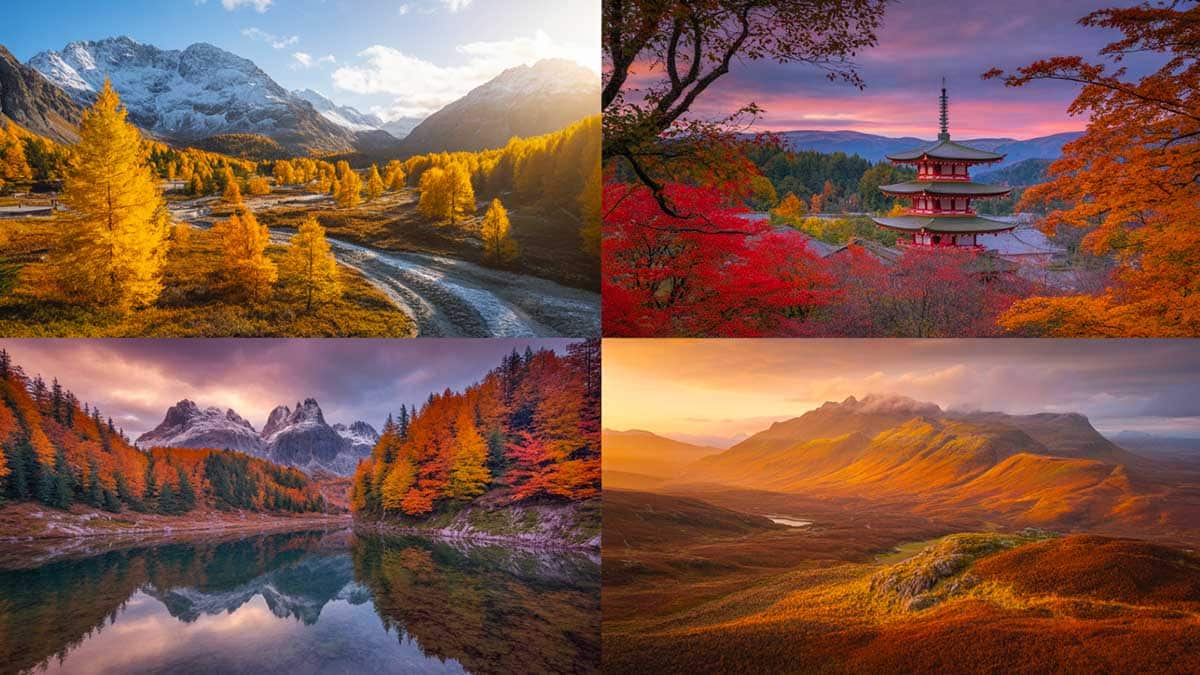
Late September through early November, the European Alps do something quietly spectacular. Take Austria’s Tyrol: golden larches against fresh snow, dark evergreens framing deep valleys. The light shifts all day, completely changing what you’re looking at.
Here’s the thing: by mid-September, summer’s tour buses are gone. Hotels drop rates 30-40%. Hiking trails stay open through October, but you’ll have them mostly to yourself. Places like Hallstatt or Lauterbrunnen suddenly feel like actual villages again instead of outdoor museums.
Worth knowing: Mountain cable cars keep running through fall. You get those elevated views without earning them via a three-hour climb. A lot of resorts bundle accommodation with lift tickets at rates where three days costs less than one summer weekend. Do the math.
Getting up there without spending everything
Regional trains link cities to villages. Day passes run €20-35. If you’re hitting multiple countries, grab an Interrail pass (unlimited movement that pays for itself fast when you’re covering ground).
One heads-up: book six weeks out. Mountain hotels often close between seasons for renovations, so availability can get tight.
Japan turned leaf-watching into an art form
In Japan, this isn’t just tourism. Momijigari (literally „hunting red leaves“) goes back to the 8th century. People visit specific temples, gardens, and mountain trails to watch the season change. Not to photograph it for Instagram (though sure, that happens). To actually watch it.
The viewing window spans three months. Hokkaido’s mountains show color by mid-September. Kyoto’s famous temple gardens peak late November. That spread means you can build a proper trip visiting multiple regions without missing anything.
What makes it different is how cultural it gets. Temples light up their gardens at night during peak color; these ancient spaces suddenly glowing. Fall festivals feature foods tied directly to the season: roasted chestnuts, sweet potato dishes, persimmons. It’s not just about the trees.
The practical bit: Japan Rail passes work for 7, 14, or 21 days. Seven days costs around $280. Two long-distance train rides and the pass pays for itself. Just buy before you land (cheaper that way).
Dodge the crowds
Everyone piles into Kyoto’s Arashiyama. Fair enough, it’s beautiful. But the Yoro Valley sits 90 minutes from Tokyowith equally stunning colors and maybe a tenth of the people. Day trip territory, so you’re not paying for extra accommodation in the middle of nowhere.
Patagonia does autumn backwards
Here’s where it gets interesting. While North America hits spring, South America’s southern tip enters fall. Bariloche and Villa La Angostura explode with color mid-March through May.
Southern beech forests turning brilliant reds and oranges, glacial lakes, Andean peaks. The landscape hits this sweet spot where it feels both familiar (those fall colors you know) and completely foreign (the geography is nothing like home).
March and April are shoulder season down here. Everything costs less. Hotels that’d run $150 in high season? Try $50. Great meals for $15-20. These aren’t backpacker prices; you can travel comfortably and still spend half what you would in New England.
Actually getting there
Fly into Bariloche from Buenos Aires. Rent a car if you want flexibility for lakeside roads and mountain passes. Or take the buses (they’re solid, connecting major towns for $10-20 per trip).
Want numbers? A 10-day Patagonia trip including flights from the US, decent hotels, good food, local transport – you’re looking at $1,500-2,000. That’s about half a comparable New England trip during peak season.
Scotland’s got colors (and nobody talks about it)
The Scottish Highlands rarely show up on fall foliage lists. Which is wild, because late September through early November they’re remarkable. Scots pine, birch forests, highland moorland; all these russet, gold, and deep amber tones that shift with the weather.
Scotland’s advantage? It’s accessible as hell. Autumn overlaps with whisky harvest season, so scenic drives double as distillery tours. The North Coast 500 route cuts through spectacular landscapes while connecting coastal villages, old castles, remote beaches.
You can stay in budget hostels or converted monasteries (the Highland Club at Fort Augustus, for example). Weather’s mild enough for hiking into November. Just pack waterproof everything (this is Scotland, after all).
Where locals actually go
Cairngorms National Park concentrates the best color. The trails between Braemar and Ballater especially. Way less crowded than England’s Lake District, comparable views. Local buses serve most trailheads if you’re skipping the rental car.
Making this work in real life
Here’s what matters: timing changes not just by country but by region and elevation within each place. Find historical peak dates for your target spot. Then book accommodation flexible enough to shift a few days if colors come early or late.
For photos, mornings and late afternoons. Midday autumn sun washes everything out. Golden hour makes those warm leaf tones actually glow.
Think about pairing autumn spots with whatever else interests you. Japan’s got temples and culture beyond the gardens. Scotland layers in history and food. Patagonia works for hikers and wildlife watchers who also happen to like leaves.
Real talk: Shoulder season means reduced schedules for some services. Check hours for specific sites, restaurants, transit before building detailed plans. But smaller crowds and lower prices usually make the minor adjustments worth it.
Autumn travel offers something that’s gotten rare: seeing popular places at their most beautiful while avoiding the masses. Whether you pick Alpine villages, Japanese temple grounds, Patagonian lakes, or Scottish highlands, fall foliage gives you reason to travel when most tourists stay home.
Dresden in 2 tagen: Altstadt, Elbe und Neustadt ohne Stress erleben
Bodensee auf deutscher Seite: Konstanz, Mainau und Lindau entspannt entdecken
The seasonal shift itself (universal but playing out differently across continents) reminds you that some of the best travel happens when you sync with natural cycles instead of vacation calendars. Autumn colors don’t require extreme adventure or massive budgets. Just willingness to go when the leaves say go, not when your usual two weeks off happen to land.
Start planning now for next year. The trees aren’t going anywhere.