Zusammenfassung anzeigen Zusammenfassung ausblenden
Summary:
- Caribbean = snorkeling paradise for everyone
- Warm, clear waters year-round (26–29 °C / 79–84 °F)
- Home to the world’s second-largest coral reef system
- Most reefs accessible right from the beach
- Encounter turtles, rays, reef sharks, starfish and more
- Best destinations by skill level and experience
- Gear checklist, safety tips, and travel seasons
Think the Caribbean is just beaches and palm trees? Stick your head underwater and you’ll change your mind fast. Just beneath the surface, a living kaleidoscope awaits, fish in impossible colors, coral cathedrals, and the slow, graceful ballet of marine life.
The best part? You don’t need scuba gear or lessons. A mask, snorkel, and fins are your ticket to exploring crystal-clear waters where visibility often exceeds 30 meters. Add bath-warm seas and you’ve got the world’s most effortless adventure.
8 UNESCO-Geoparks in Deutschland, die dich wirklich rausziehen
St. Peter-Ording in 48 Stunden: Strand, Watt, Kopf frei
Why the Caribbean became the snorkeling capital of the world
There’s a reason snorkelers flock here: the region’s geography has created an almost perfect playground. Water temperatures stay steady between 26 and 29 °C, meaning you can float for hours without a wetsuit.
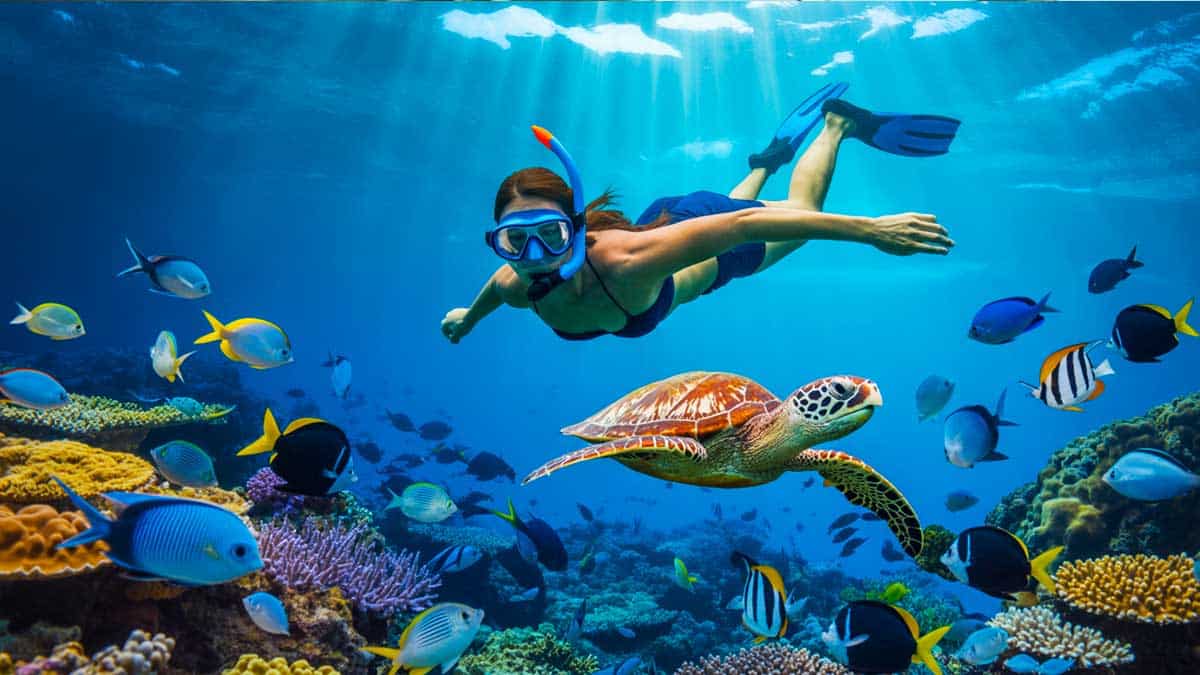
The Mesoamerican Barrier Reef, stretching 900 km from Mexico to Honduras, is the planet’s second-largest. It shelters over 500 species of tropical fish, along with turtles, rays, and harmless reef sharks. Visibility often exceeds 30 m, so you can see every scale, every coral polyp.
What really sets it apart? Accessibility. Forget pricey boat trips, in the Caribbean, you can reach stunning reefs from the shore. Slip on your gear, walk into the water, and you’re instantly inside an underwater theater.
What you’ll actually see underwater
Coral reefs : the beating heart of the caribbean
If you visit just one kind of site, make it a coral reef. These living structures host entire underwater cities where thousands of species coexist. You’ll spot brain corals shaped like sculptures, sea fans waving in the current, and elkhorn corals stretching toward the light.
The show never stops: angelfish with geometric patterns dart between corals, while parrotfish nibble rock and turn it into sand — literally creating the white beaches you walk on. Sergeant majors move in tight formations, and moray eels,peek out from crevices, curious but calm.
Shipwreck reefs : when rust becomes art
The Caribbean seafloor is dotted with wrecks, some accidental, others intentionally sunk to form artificial reefs. Within months, they’re covered in corals and sponges. Over years, they turn into vibrant underwater neighborhoods.
In Grenada, the famous Underwater Sculpture Park features 75 cement statues that now serve as coral habitats. Swimming among these life-encrusted figures feels surreal, like drifting through a submerged art gallery suspended between history and nature.
Seagrass meadows : subtle but full of life
They may look plain, but seagrass beds are nurseries for countless species. Here you’ll find the bright-red cushion starfish, a local icon, and rays hidden in the sand until they suddenly glide away beneath you. Sea turtles graze calmly like aquatic cows, offering unforgettable encounters for those patient enough to wait quietly.
Where to go depending on what you want
| Experience | Destination | What to Expect | Level |
| Swim with sharks | Hol Chan Reserve, Belize | Gentle nurse sharks | Intermediate |
| From the beach | Anse Chastanet, Saint Lucia | Reefs just meters from shore | Beginner |
| Shallow wrecks | Caracasbaai, Curaçao | Tugboat at 5 m | Beginner |
| Underwater art | Molinere Bay, Grenada | 75 coral-covered sculptures | All levels |
| Starfish heaven | Starfish Point, Grand Cayman | Dozens of cushion starfish | All levels |
| Blue holes | Andros, Bahamas | Caverns and sinkholes | Intermediate |
The gear you need (and how not to less It up)
A well-fitting mask makes or breaks the experience, test it by pressing it to your face and inhaling through your nose. If it sticks, it fits. Choose a soft silicone snorkel to avoid jaw pain and fins that make swimming effortless.
On rocky or coral beaches, wear water shoes to avoid cuts. A small investment ensures hours of comfort and exploration.
The basic rules (for safety and the reef)
Safety first:
- Never snorkel alone, always go in pairs.
- Check weather and currents. A red flag means stay ashore.
- Keep the coastline in sight at all times.
- If you’re not a strong swimmer, wear a vest.
- Use a visible surface buoy when venturing far.
For the environment:
- Never touch corals, they take years to recover.
- Keep distance from marine animals, admire, don’t interfere.
- Use only reef-safe sunscreen (no oxybenzone or octinoxate).
- Don’t take anything: shells, coral, starfish, leave it all behind.
- Don’t feed the fish; it disrupts their behavior.
When to go (and how to dodge the crowds)
Honeymoon around the world: 6 journeys that write a love story
The Nordic happiness code: why Finland keeps smiling while others struggle
The “perfect” season runs December to April, calm seas, perfect visibility, but also peak crowds and prices. The rainy season (June–November) offers lower prices and emptier reefs, plus turtle nesting and hatching between September and October.
For the best light and wildlife:
- Early morning (before 9 AM): calm water, active fish, no crowds
- Midday (12–2 PM): ideal for underwater photos
- Late afternoon (5–6 PM): warm light and hunting fish
- Night snorkeling: rare species, magical glow — bring a guide and a light
One last word before you dive in
Whether you’re floating in shallow water watching starfish or exploring wrecks 10 meters deep, Caribbean snorkeling adapts to every level. Each session brings unexpected magic,a turtle grazing beside you, a silver school encircling you, or a ray lifting off like a bird.
For a modest cost (about 50 € in gear) and with zero training required, you gain access to the most stunning open-air cinema on Earth. Just add respect for nature, and you’ll be rewarded with memories that last a lifetime.