Zusammenfassung anzeigen Zusammenfassung ausblenden
Summary:
- The best seasons for treks and festivals.
- How to pack light but smart for mountains and temples.
- Cultural etiquette that earns genuine smiles.
- Real costs and fair tipping practices.
- Three meaningful routes for a first visit.
After years of rebuilding, Nepal has found its rhythm again. With more than 800,000 visitors this year and momentum toward a million, the country feels alive yet grounded. Roads are improving, flights are easier, and travelers are coming back with purpose rather than simple curiosity.
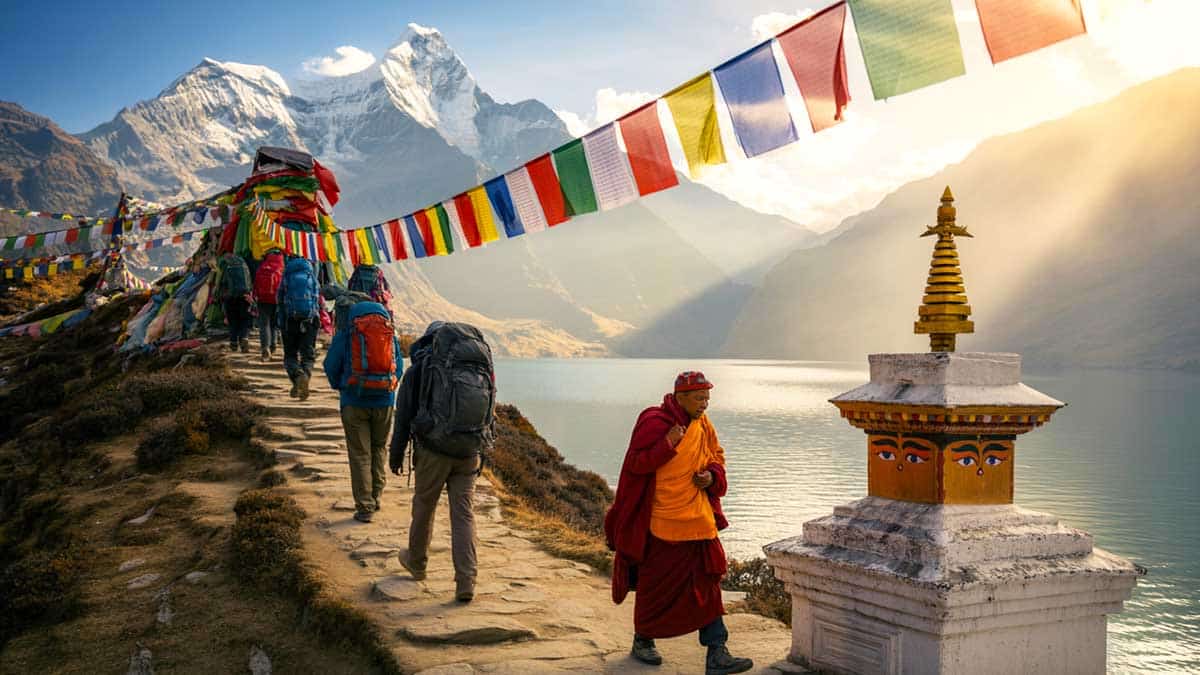
In Kathmandu, horns mix with temple bells. In Pokhara, trekkers watch the Annapurnas rise above Lake Phewa at dawn. Farther north, the valleys of Langtang and the Everest foothills hum again with footsteps and prayer flags. Nepal has not just reopened to tourism, it has redefined it, slower, more respectful, more human.
64 % waren weg: Was das über Urlaub in Deutschland verrät
Avignon an einem Tag: Die entspannte Route für Palast, Brücke und Markt
When to go and what to expect
Nepal’s rhythm follows its mountains. Spring (March to May) brings wild rhododendrons and long clear skies. Autumn (September to November) offers the best trekking weather and the glow of Dashain and Tihar, when families decorate their homes with lamps and flowers.
Local tip: Even in high season, the Himalaya can hide behind clouds. A clear sunrise feels like a reward, not a guarantee.
Winter offers quiet valleys and mild weather in the south, while summer brings green jungles and fewer crowds. Every season shows a different face of the country, each worth meeting.
Pack for the journey, not for the photo
Travel in Nepal rewards preparation, not perfection. The three layer rule works anywhere:
- a light, breathable base (never cotton)
- a warm middle layer (fleece or wool)
- a waterproof, windproof shell
Carry an extra pair of warm socks for temples, since you remove shoes at every entrance. Bring five or six passport photos for trekking permits and about 30 USD (euros accepted) for your visa.
Roads are winding and slow, 120 km can mean six hours. Keep sanitizer handy, motion sickness pills nearby, and patience always within reach.
Practical note: In rural areas, simple clothing is more appreciated than style. Modesty earns respect everywhere.
Money, transport, and tipping
The Nepalese rupee (NPR) rules daily life. ATMs are available in Kathmandu and Pokhara, but rare beyond. Credit cards are almost useless in small towns.
Tipping guide:
- Trekking guide: 1,000 to 1,500 NPR per day (double for high altitude routes)
- Driver: 500 to 1,000 NPR per day
- Porter or bellhop: 150 to 500 NPR
Budget insight: Count 3,000 to 4,000 NPR per day for food, lodging, and local transport. Double it for comfort or private tours.
Getting around is half the experience, crowded buses, mountain dust, smiling strangers. In Nepal, the road teaches patience long before the peaks do.
Understanding local etiquette
Courtesy here is shown through small gestures. Walk clockwise around temples, step in with your left foot, remove your shoes, and dress modestly. Use your right hand to give or receive anything, from cash to tea, and you will fit in easily.
Most locals speak some English and appreciate effort more than perfection. A smile bridges languages faster than words.
During Shivaratri, the festival honoring Lord Shiva, the Pashupatinath Temple in Kathmandu fills with smoke, chants, and sacred fire. Sadhus (holy men covered in ash) pray and meditate among the crowds. Outside this celebration, hashish use is illegal, even if stories suggest otherwise.
Traveler’s note: Always ask before photographing monks or rituals. Most will say yes, and often with grace.
Eat light, walk far
Food in Nepal is fuel for the soul and the trek. The national dish, dal bhat (rice, lentils, vegetables), sustains millions daily. Locals joke, dal bhat power, 24 hour, and they are right.
Eat local, skip heavy alcohol, and drink plenty of water. Altitude rewards those who listen to their bodies. Try butter tea in a mountain lodge, it is salty, strange, and unforgettable when the wind cuts cold.
Travel insight: The best meals often come unplanned, shared with strangers in small kitchens, warmed by steam and stories.
Three ways to discover Nepal for the first time
1. The Classic Route (Kathmandu, Pokhara, Annapurna Foothills)
Explore Durbar Square, Swayambhunath Stupa, and Patan’s quiet courtyards. Then head to Pokhara for lake views and a dawn hike to Poon Hill. This route blends culture and nature effortlessly.
2. The Authentic Route (Langtang Valley)
A quieter trek north of the capital, reachable by bus. Meet Tamang communities, snowy peaks, and monastery chants echoing across the valley. Langtang feels close to daily life, more than any photo can show.
3. The Spiritual Route (Lumbini and the Southern Plains)
Visit Lumbini, birthplace of the Buddha, near the Indian border. Monasteries from across Asia welcome travelers for meditation and reflection. Time slows, and so does the mind.
Nepal’s new era of sustainable travel
Since 2022, Nepal has rebuilt with purpose. New flights, digital visas, upgraded trails make the country more accessible. Villages now host eco lodges, and local guides are trained in responsible tourism.
What this means for you: easier permits, safer treks, and direct benefits for communities. By traveling mindfully, you join Nepal’s effort to grow without losing its soul.
Tourism here is no longer about numbers, it is about balance, progress with preservation.
Nepal is not a destination to tick off, it is a space to slow down and breathe differently. The peaks teach patience, the people teach humility. Between the chaos of Kathmandu and the stillness of high passes, something essential unfolds, travel becomes less about distance and more about depth.
Zypern im Mietwagen: Die Route für 7 bis 14 Tage ohne Stress
Langkawi ohne Stress erleben: Strand, Aussicht und einfache Tipps
Take your time, walk softly, look up often. When the mountains finally appear, you will understand why travelers return.
Curious to explore more hidden places? Discover them here.